This is what I learned about Circular Motion. Objects in circular motion have a constant velocity, or "Uniform Circular Motion." In these cases the objects are experiencing an inward or centripetal acceleration. Although the velocity's magnitude does not change it is accelerating because it is changing direction. The objects velocity at any given point is tangential. You can find a tangential line by drawing a line through the circle that only intercepts the circumference in the exact point of the object's location. The objects in circular motion move along the circumference or perimeter of the circle. The perimeter of a circle can be calculated by 2 pi R or pi D. The frequency is the number of full circular rotations per unit of time (s), also known as Hz, and the Period (T) is the time for the object to complete one entire rotation around the circle. In order to keep an object in a circular motion there must be an inward force. This is also known as the "centripetal force requirement.” Commonly this force is friction, found by multiplying Mu and Fn, the x component of tension, or gravity. The minimum force needed to keep an object in circular motion can be found by using the equation Fc=mv^2/r giving you units (N). You can find the centripetal acceleration by using the equation Ac=v^2/r giving you the units (m/s^2). In vertical circular motion the tension in the string or cable varies with the position of the object. At the highest point and lowest point in a circle you find the centripetal force that must equal (mv^2/r). This can easily be found by drawing an FBD with an arrow showing the object's acceleration. Any force working with the acceleration is positive and any force moving in the opposite direction of the acceleration is negative. Just as in problems involving torque, and systems you put the forces moving in the direction of the movement or acceleration as positive, and the forces moving in the opposite direction of the acceleration as negative.
This is what I learned about Universal Gravitation. Isaac Newton proposed an abstract theory that all masses attract each other, just as the earth attracts all objects in and outside of its atmosphere. He proposed "Every object in the universe attracts every other object in the universe (FG) with a force(G) that varies directly with the product of their masses(m1 and m2) and inversely with the square of the distance between the centers of the two masses(r^2)." This gives us the primitive equation Fg=Gm1m2/r^2 that can be manipulated to solve for any item in the equation. The "G" in the equation has been calculated by Cavendish as 6.67e-11 (N.m^2/kg^2).
What I have found difficult about what I have studied is setting up equations where you have masses and variables that "cancel out." This is something that some people have an eye for, but I am learning to recognize these occurrences in common circumstances. I have learned what the source of gravity is, and how planets, satellites, and moons are in a constant state of "freefall." I think that by learning circular movement I now better understand frictional force.
My problem-solving skills have become better in recent weeks. Some problems in our homework assignments and recent flying pig and "Holy Cow" labs have really made me realize the power of physics. I have tested myself by thinking about problems constantly as I go through my normal daily routine. While going through my day I sometimes think back to the problem that puzzled me earlier. By helping other students with problems and asking for help on assignments I think that our class community has done a good job helping each other grasp concepts. I think that I could take advantage of our wiki more and get feedback from more than just the one friend I call, and at the same time, help the entire class better learn or be exposed to a concept in a new way.
Wednesday, January 27, 2010

Sunday, January 10, 2010
Reflection 2
This is what I learned about Newton's Second Law. Newton's second law is Net Force equals mass times acceleration. In order to use our given information you must analyze the exact meaning of it. You must know in which direction the object is moving. Once you now this fact, you decide which forces are helping the object move in that direction and which ones are working against the movement. All forces moving with the movement are put into the equation as positive, and all the forces acting against the movement are negative. When you are determining which forces to included you only use the ones that work in the same axis, or along a cord, to find the net force. In order to help yourself do this, drawing a FBD is useful. When there are two systems involved your use the sum of the forces to equal Mass(total) times acceleration. Commonly, in physics problems, there is a Frictional Force that acts in the opposite direction. The equation to find the MU is Ff=MU* Fn. In order to find the Fn you use the equation Sum Fy=Fn-Fg equals 0 (if the object is resting on a surface and not falling through the table.) The unit for MU is Naked! This is because the units Newton's/Newton's cancels out. I also learned why air resistance allows for terminal velocity. When the Frictional air force is equal to the gravitational force, the object can no longer accelerate, causing terminal velocity. Air resistance is caused by the interaction of a surface and the atmosphere. The surface area and the speed of the object cause for greater air resistance.
When we first learned about pulleys and tensions I had a hard time understanding how to find the tension in the string. I finally realized it was as simple as solving for Ft in my sum of forces equation. As usual, I don't always understand concepts at the first look at a concept. Frequently I leave the problem aside and then look at it later with a fresh and clean approach. Most of the time this technique works.
My problem-solving skills have improved since my last reflection. I think I have put more effort into understanding the material and the homework assignments. I have made my learning of the material rather than completion a priority. I think that I have become more systematic with my problem solving than I used to be. In the past my thoughts and problem solving methods have been very unorthodox, but now I use the same thoughts, but organize them on the page better. I have become less careless in my work, and I think this has caused me to enjoy math and physics more.
Thank you for your comments!
When we first learned about pulleys and tensions I had a hard time understanding how to find the tension in the string. I finally realized it was as simple as solving for Ft in my sum of forces equation. As usual, I don't always understand concepts at the first look at a concept. Frequently I leave the problem aside and then look at it later with a fresh and clean approach. Most of the time this technique works.
My problem-solving skills have improved since my last reflection. I think I have put more effort into understanding the material and the homework assignments. I have made my learning of the material rather than completion a priority. I think that I have become more systematic with my problem solving than I used to be. In the past my thoughts and problem solving methods have been very unorthodox, but now I use the same thoughts, but organize them on the page better. I have become less careless in my work, and I think this has caused me to enjoy math and physics more.
Thank you for your comments!
Monday, December 7, 2009
Newton's First Law
PART A
This is what I learned about Newton's First Law. Also known as the Law of Inertia, Newton's First Law states that an object at rest will stay at rest and an object in motion will stay in motion unless acted upon by an unbalanced force. In this scenario, the object has the potential to change direction, slow down, and speed up. When an object is at rest, the sum of the forces in both the x and y axes equals zero. When this happens the object is in equilibrium, also known as translational equilibrium. In order to solve many problems where forces act upon objects, you must separate forces into x and y components. This is important when forces, including gravity, act upon the object at an angle other than 0, 90, 180, 270, or 360 degrees, where the force would not be associated with an axis. In order to find the resultant vector you use the Pythagorean Theorem (R=sq. rt. (A^2 + B^2). Substitute A and B with Sum of the X and Sum of the Y. To find the direction of the force you use the equation tan^-1 (Sum Y/Sum X)*absolute value. Using the calculated Resultant Force you can find the mass by Fg = mg. I also learned that the Equilibrant and Resultant Forces have the same magnitude and mass, but are in the opposite directions (a difference of 180 degrees). This is what I have learned about Newton's First Law, Inertia, and Forces acting upon objects.
What I have found difficult about what I have studied is setting up the equations to find the x and y components of forces. I need to develop more skill in this area so that I can be more time efficient. Whenever I stumble upon a problem, I always have to stop and go through my SOH CAH TOA, and see which one makes sense. This process takes me more time than I would expect of myself, and commonly after I finish the problem I second guess my work, or feel uncomfortable. Whenever I am required to find the x and y component of gravity I have to analyze the force very closely. Also, whenever I am given an angle of a force in a problem I am forced to think of which angle is actually relevant to the problem.
I feel that my problem-solving skills are generally pretty good. I often find myself getting frustrated, setting aside the material, and then coming back to the work where I have an epiphany, or an "AhHa!" moment. From then on, I try to build my confidence and I commonly make up my own problems, or re-do the problems in the homework or class work. I feel that I help myself understand the problem further by making myself visuals such as FBD's or other sketches. I have a hard time memorizing equations with variables, and I have found a way that has made me be successful. Whenever I am introduced to a new equation, I take a few minutes to look at the equation and try to understand its purpose, meaning, and why it works. By doing this, when I am introduced to a foreign style of problem I have a higher chance of knowing which equation to use.
PART B
The physics we are learning in class can be transferred into our understanding of our natural world around us. Engineers use physics and Newton's laws when designing tables, lifts, and motors. The engineers must calculate the strength of the material or device in order to build a special race car, cable-stayed bridge, or a hydraulic car lift. Also, when we are in a car crash our bodies want to continue in our current direction, when there is another force causing the car to slow down, speed up, or change direction. It is this abruptness that causes injuries in car wrecks due to whiplash, and sudden changes in velocities. When I walked into school this morning, I opened a door applying pressure as far from the hinge as possible because then the force would be the most effective.
This is what I learned about Newton's First Law. Also known as the Law of Inertia, Newton's First Law states that an object at rest will stay at rest and an object in motion will stay in motion unless acted upon by an unbalanced force. In this scenario, the object has the potential to change direction, slow down, and speed up. When an object is at rest, the sum of the forces in both the x and y axes equals zero. When this happens the object is in equilibrium, also known as translational equilibrium. In order to solve many problems where forces act upon objects, you must separate forces into x and y components. This is important when forces, including gravity, act upon the object at an angle other than 0, 90, 180, 270, or 360 degrees, where the force would not be associated with an axis. In order to find the resultant vector you use the Pythagorean Theorem (R=sq. rt. (A^2 + B^2). Substitute A and B with Sum of the X and Sum of the Y. To find the direction of the force you use the equation tan^-1 (Sum Y/Sum X)*absolute value. Using the calculated Resultant Force you can find the mass by Fg = mg. I also learned that the Equilibrant and Resultant Forces have the same magnitude and mass, but are in the opposite directions (a difference of 180 degrees). This is what I have learned about Newton's First Law, Inertia, and Forces acting upon objects.
What I have found difficult about what I have studied is setting up the equations to find the x and y components of forces. I need to develop more skill in this area so that I can be more time efficient. Whenever I stumble upon a problem, I always have to stop and go through my SOH CAH TOA, and see which one makes sense. This process takes me more time than I would expect of myself, and commonly after I finish the problem I second guess my work, or feel uncomfortable. Whenever I am required to find the x and y component of gravity I have to analyze the force very closely. Also, whenever I am given an angle of a force in a problem I am forced to think of which angle is actually relevant to the problem.
I feel that my problem-solving skills are generally pretty good. I often find myself getting frustrated, setting aside the material, and then coming back to the work where I have an epiphany, or an "AhHa!" moment. From then on, I try to build my confidence and I commonly make up my own problems, or re-do the problems in the homework or class work. I feel that I help myself understand the problem further by making myself visuals such as FBD's or other sketches. I have a hard time memorizing equations with variables, and I have found a way that has made me be successful. Whenever I am introduced to a new equation, I take a few minutes to look at the equation and try to understand its purpose, meaning, and why it works. By doing this, when I am introduced to a foreign style of problem I have a higher chance of knowing which equation to use.
PART B
The physics we are learning in class can be transferred into our understanding of our natural world around us. Engineers use physics and Newton's laws when designing tables, lifts, and motors. The engineers must calculate the strength of the material or device in order to build a special race car, cable-stayed bridge, or a hydraulic car lift. Also, when we are in a car crash our bodies want to continue in our current direction, when there is another force causing the car to slow down, speed up, or change direction. It is this abruptness that causes injuries in car wrecks due to whiplash, and sudden changes in velocities. When I walked into school this morning, I opened a door applying pressure as far from the hinge as possible because then the force would be the most effective.
Monday, November 9, 2009
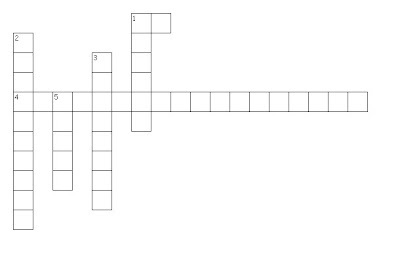
Content: Projectile Motion at an Angle Terms- Review Criss Cross Puzzle
Projectile Motion at an Angle
Across
1. It is affected by gravity throughout the projectile motion
4. R=square root of A^2+B^2
Down
1. This has magnitude and direction
2. These can be derived from the resultant vector and produce x and y values
3. this determines the sign of the x and y component vectors
5. the measure of angle in degrees counterclockwise from the x axis(right)
Saturday, November 7, 2009
Friday, November 6, 2009
Content + Application: Eric's Physics Projectile Motion Vs. Roger Federer Video
You are about to enjoy my video over projectile motion at an angle including real tennis court measurements, correct and complete equations, and class humor!
By creating this video I now know youtube.com inside and out! Ask me if you have any questions please! It is not simple so please ask before you waste your time!
Subscribe to:
Posts (Atom)